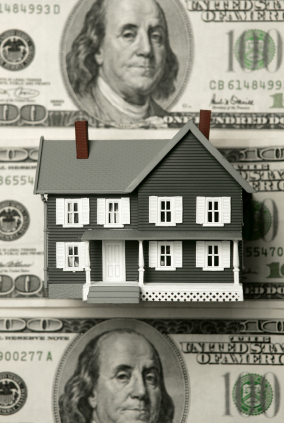
Real Estate Commissions: You Get What You Pay For
by The KCM Crew on March 7, 2012
Considering a Discount Broker?
Does it makes sense to pay a full commission to your real estate agent in today’s market? Sellers, buyers and even agents are debating what should be charged to assist a consumer in completing a real estate transaction. Forget what the actual amount of the commission is. The bigger question is whether you should pay a ‘full fee’ when hiring a real estate expert to guide you through the complexities of today’s rapidly changing housing environment.
If a full fee was the rule in 2006 when completing a deal was so much simpler, why would you now consider cutting the fee of your agent in today’s tumultuous market? You are depending on this person to help you reach your goals in a sale or purchase. In 2006, buyers were willing to pay almost anything to a seller just to get into a home. Banking entities seemed to be willing to mortgage any property for any buyer. The process was rather simple.
Today, a person looking to buy or sell should be willing and ready to pay a full fee for two reasons:
You need an expert guide if you are traveling a dangerous path:
The field of real estate is loaded with land mines. You need a true expert to guide you through the dangerous pitfalls that currently exist. Finding a buyer willing to pay fair market value for your home at a time that there are mass inventories of foreclosures and short sales will take a true real estate professional. Finding reasonable financing can also be tricky in today’s lending environment.
Experts in any profession do not discount their fees; especially when the job is becoming much more difficult.
You need a skilled negotiator
In today’s market, hiring a talented negotiator could save you thousands, perhaps tens of thousands of dollars. Each step of the way – from the original offer, to the possible re-negotiation of that off after a home inspection, to the possible cancellation of the deal based on a troubled appraisal – you need someone who can keep the deal together until it closes.
When an agent is negotiating their commission with you, they are negotiating their own salary – the salary that keeps a roof over their family’s head; the salary that puts food on their family’s table. If they are quick to take less when negotiating for themselves and their families, what makes you think they will not act the same way when negotiating for you and your family? If they were Clark Kent when negotiating with you, they will not turn into Superman when negotiating with the buyer or seller in your deal.
Bottom Line
We believe that famous sayings become famous because they are true. You get what you pay for. Just like a good accountant or a good attorney, a good agent will save you money…not cost you money.
Berkshire Hathaway HomeServices Florida Realty | Dressed to Kill...Licensed to Sell (Your Home)
Wednesday, March 7, 2012
Wednesday, February 29, 2012
Real Estate Forecast 2012 and Beyond: Warren Buffett Says Buy, Baby, Buy!
Real Estate Forecast 2012 and Beyond: Warren Buffett Says, "Buy, Baby, Buy!"
By Hao Li
By Hao Li
Warren Buffett's real estate forecast for 2012 and beyond is extremely rosy, with the so-called Oracle of Omaha even recommending buying them over investing in a diversified group of leading companies.
In an interview with CNBC on Monday, Buffett said single-family homes, along with stocks, are cheap and attractive investments. By contrast, investments in Treasury bills, gold or simply keeping money in cash are not as attractive.
Buffett said if he had a way to buy "a couple hundred thousand single-family homes" and easily manage them, he would "load up on them" and "take mortgages out at very, very low rates."
However, he said that managing "a couple hundred thousand single-family homes" is an impossibly Herculean logistical task.
This line of reasoning likely holds true for many brilliant investment minds who choose not to bother with buying single-family homes -- even though they are undervalued -- when buying and owning stocks is as easy as a few keystrokes and mouse clicks on a computer.
Buffett said if he had a way to buy "a couple hundred thousand single-family homes" and easily manage them, he would "load up on them" and "take mortgages out at very, very low rates."
However, he said that managing "a couple hundred thousand single-family homes" is an impossibly Herculean logistical task.
This line of reasoning likely holds true for many brilliant investment minds who choose not to bother with buying single-family homes -- even though they are undervalued -- when buying and owning stocks is as easy as a few keystrokes and mouse clicks on a computer.
Because of the absence of many of these big institutional investors in the U.S. residential real estate market, it is less competitive than the stock market, Buffett said. When institutional investors of size do enter the residential real estate market, they usually go for apartment buildings, which leaves the single-family homes segment even less competitive than the general residential real estate market.
When asked if a young individual investor should buy stocks or his first single-family home, Buffett recommended buying a single-family home with a 30-year mortgage.
"It's a terrific deal," he said. "It's a leveraged way of owning a very cheap asset now and I think that's probably as an attractive an investment as you can make now."
In fact, if the young individual investor is "a handy type," he could "buy a couple of them at distressed prices and find renters," said Buffett.
Buffett is famous for only investing in assets he believes are undervalued. He must, therefore, believe that the U.S. residential real estate market is undervalued.
One valuation metric for residential properties is the price-to-rent (P/R) ratio, which roughly corresponds to the price-to-earnings (P/E) ratio for stocks.
As seen on the chart below, the rent-to-earnings ratio has fallen to 2004 levels.
A perhaps even better argument that the real estate market is historically cheap, however, is that mortgage rates are at or near the historic low.
Mortgage rates are a huge driving factor of the ultimate cost of purchasing a home.
For example, the total interest expense of a $200,000, 30-year fixed-rate mortgage at a 4 percent mortgage rate, which is the current rate, is $144,000. At 10 percent, which was the prevalent rate in 1990, interest expense comes to $432,000.
When asked if a young individual investor should buy stocks or his first single-family home, Buffett recommended buying a single-family home with a 30-year mortgage.
"It's a terrific deal," he said. "It's a leveraged way of owning a very cheap asset now and I think that's probably as an attractive an investment as you can make now."
In fact, if the young individual investor is "a handy type," he could "buy a couple of them at distressed prices and find renters," said Buffett.
Buffett is famous for only investing in assets he believes are undervalued. He must, therefore, believe that the U.S. residential real estate market is undervalued.
One valuation metric for residential properties is the price-to-rent (P/R) ratio, which roughly corresponds to the price-to-earnings (P/E) ratio for stocks.
As seen on the chart below, the rent-to-earnings ratio has fallen to 2004 levels.
Moreover, as the economy recovers, both rent and housing prices should rise as well.A perhaps even better argument that the real estate market is historically cheap, however, is that mortgage rates are at or near the historic low.
Mortgage rates are a huge driving factor of the ultimate cost of purchasing a home.
For example, the total interest expense of a $200,000, 30-year fixed-rate mortgage at a 4 percent mortgage rate, which is the current rate, is $144,000. At 10 percent, which was the prevalent rate in 1990, interest expense comes to $432,000.
Friday, February 10, 2012
Landmark Settlement with Mortgage Lenders Provides Relief for Some Struggling Home Owners
Note to Sellers: $25B National Settlement on Rob-Signing Scandal - How It May Affect the Value of Your Home
Limbo makes for a very unpleasant place to live, and that is exactly where thousands upon thousands of homeowners have been over the past year since the scandal broke. Now that virtually every state including Florida has signed off on the $25B settlement ($8.4B earmarked for Florida), the court system is no longer encumbered by this pending litigation and the backlog of foreclosure proceedings will likely decrease as the pace of finalizing the processes get undereway again and accelerate.
The second page of the article in today's Miami Herald gives us a hint as to the potential impact this may have on the number of foreclosure properties that may come on the market:
"There are also more than 250,000 homes stuck in Florida’s lengthy foreclosure process, more than any other state in the country. The settlement may shorten the state’s foreclosure timeline — currently above two years — as banks will no longer be held up by charges of robo-signing. Still, several of the homes in foreclosure are so far behind on payments that even if banks reduce the amount owed, the homeowner will not be able to catch up."
"Several", in my opinion, may be a kind choice of words used to describe the vast number of homes whose delinquent mortgage balances are beyond the home owners' ability to bring current. If balances are not able to be satisfied either by full payment or some other installment agreement reached between the lender and the home owner, the banks will likely take posession of the homes and re-sell them as REO properties. Needless to say, the homes will likely be sold at substantial discounts which will affect the value of surrounding homes. This can affect future appraisals and will probably create a higher number of short sales. End result: the price of your home may come down.
Bottom Line: If you are currently selling your home or plan to sell in the near future, pricing your home as competitively as possible today to get it sold now will produce greater net proceeds than waiting for the unintended consequences of this court settlement.
Read more here: http://www.miamiherald.com/2012/02/09/2634050_p2/landmark-settlement-with-mortgage.html#storylink=cpy
Tuesday, January 31, 2012
4 Questions to Ask Before Buying a Foreclosure
DAILY REAL ESTATE NEWS | TUESDAY, JANUARY 31, 2012
Foreclosures can offer big bargains, but buyers need to be careful that they don’t get over their heads in purchasing a home that may need more repairs than they bargained for.
Foreclosures are usually sold as-is, and homes that are left vacant standing too long can have a lot of maintenance problems.
Real estate experts suggest buyers consider the following questions:
1. How long has the home been vacant? Be cautious of a foreclosed home that has stood vacant for more than a few weeks or had its utilities shut off a long time. Marvin Goldstein, a home inspector for many foreclosed properties, says a home can deteriorate quickly when heating, cooling, electricity, and running water have been turned off for awhile.
2. How old is the home? Goldstein says that homes that are more than 50 years old may have a failing plumbing system or inadequate electrical wiring.
3. How does the home look? Are there broken windows, gutters hanging down, or damaged siding? “Trust your instincts. If the house looks bad from the outside, it's probably worse than you think,” Goldstein told The Oklahoman.
4. Is there anything missing? Sometimes former owners remove anything of value from the home, such as built-in light fixtures, bathroom tile, water heaters, air-conditioning units, and hardwoods, says Bill Jacques, president-elect of the American Society of Home Inspectors.
Housing experts encourage buyers to get a home inspector to look at the property, even if it is sold as-is, so that home buyers know any repairs needed and cost estimates before they purchase the home.
“Buying a bank-owned home gives you the opportunity to enter the market at a very low price level,” says Dorcas Helfant, a past president of the National Association of REALTORS®. “You can find terrific values among foreclosures, especially if they're not in too bad shape. But, remember, these houses are discounted for a reason.”
Source: “Foreclosed Homes May Need Extensive Repairs,” The Oklahoman (Jan. 28, 2012)
DAILY REAL ESTATE NEWS | TUESDAY, JANUARY 31, 2012
Foreclosures can offer big bargains, but buyers need to be careful that they don’t get over their heads in purchasing a home that may need more repairs than they bargained for.
Foreclosures are usually sold as-is, and homes that are left vacant standing too long can have a lot of maintenance problems.
Real estate experts suggest buyers consider the following questions:
1. How long has the home been vacant? Be cautious of a foreclosed home that has stood vacant for more than a few weeks or had its utilities shut off a long time. Marvin Goldstein, a home inspector for many foreclosed properties, says a home can deteriorate quickly when heating, cooling, electricity, and running water have been turned off for awhile.
2. How old is the home? Goldstein says that homes that are more than 50 years old may have a failing plumbing system or inadequate electrical wiring.
3. How does the home look? Are there broken windows, gutters hanging down, or damaged siding? “Trust your instincts. If the house looks bad from the outside, it's probably worse than you think,” Goldstein told The Oklahoman.
4. Is there anything missing? Sometimes former owners remove anything of value from the home, such as built-in light fixtures, bathroom tile, water heaters, air-conditioning units, and hardwoods, says Bill Jacques, president-elect of the American Society of Home Inspectors.
Housing experts encourage buyers to get a home inspector to look at the property, even if it is sold as-is, so that home buyers know any repairs needed and cost estimates before they purchase the home.
“Buying a bank-owned home gives you the opportunity to enter the market at a very low price level,” says Dorcas Helfant, a past president of the National Association of REALTORS®. “You can find terrific values among foreclosures, especially if they're not in too bad shape. But, remember, these houses are discounted for a reason.”
Source: “Foreclosed Homes May Need Extensive Repairs,” The Oklahoman (Jan. 28, 2012)
Energy Efficient Mortgages and Energy Improvement Mortgages
WASHINGTON – Jan. 31, 2012 – If a home is energy efficient and conserves energy, the monthly utility bills won’t be as high. And if the bills aren’t as high, a buyer can afford to pay more each month on the mortgage.
That’s the theory behind Energy Efficient Mortgages (EEMs). EEMs allow borrowers to qualify for a larger loan and a better, more energy-efficient home.
EEMs are typically used to purchase a new home that is already energy efficient, such as an ENERGY STAR qualified home. However, the term EEM refers to all types of energy mortgages, including Energy Improvement Mortgages (EIMs), which can be used to purchase an existing home that the buyer plans to improve with energy efficient upgrades. EIMs allow borrowers to roll the cost of the upgrades into the mortgage without increasing the downpayment.
Both EEMs and EIMs typically require that a home energy rating – an estimate of monthly energy savings – be given to the lender before the loan can be approved.
Conventional Energy Efficient Mortgages
Lenders who sell loans to Fannie Mae and Freddie Mac can offer conventional EEMs. Conventional EEMs increase the borrower’s income by a dollar amount equal to the estimated energy savings. The Fannie Mae loan also adjusts the value of the home to reflect the value of the energy efficiency measures. For more information about Fannie Mae’s EEM you can call 1-800-7FANNIE (732-6643).
FHA Energy Efficient Mortgages
The mortgage loan amount for an FHA EEM can be increased by the cost of effective energy improvements. The maximum amount of the portion of the EEM for energy efficient improvements is the lesser of 5 percent of the value of the property, or 115 percent of the median area price of a single family dwelling, or 150 percent of the conforming Freddie Mac limit.
For more information on FHA EEM loans, visit HUD.gov. Additional information is available from HUD’s Office of Single Family Housing by calling (800) 569-4287.
VA Energy Efficient Mortgages
The Veteran’s Administration (VA) EEM is available to qualified military personnel, reservists and veterans, and caps energy improvements at $3,000 – $6,000. Borrowers should ask their lender about a VA EEM at the beginning of the lending process. More information about VA EEMs can be obtained from the website for the U.S. Department of Veteran’s Affairs or by calling (800) 827-1000.
That’s the theory behind Energy Efficient Mortgages (EEMs). EEMs allow borrowers to qualify for a larger loan and a better, more energy-efficient home.
EEMs are typically used to purchase a new home that is already energy efficient, such as an ENERGY STAR qualified home. However, the term EEM refers to all types of energy mortgages, including Energy Improvement Mortgages (EIMs), which can be used to purchase an existing home that the buyer plans to improve with energy efficient upgrades. EIMs allow borrowers to roll the cost of the upgrades into the mortgage without increasing the downpayment.
Both EEMs and EIMs typically require that a home energy rating – an estimate of monthly energy savings – be given to the lender before the loan can be approved.
Conventional Energy Efficient Mortgages
Lenders who sell loans to Fannie Mae and Freddie Mac can offer conventional EEMs. Conventional EEMs increase the borrower’s income by a dollar amount equal to the estimated energy savings. The Fannie Mae loan also adjusts the value of the home to reflect the value of the energy efficiency measures. For more information about Fannie Mae’s EEM you can call 1-800-7FANNIE (732-6643).
FHA Energy Efficient Mortgages
The mortgage loan amount for an FHA EEM can be increased by the cost of effective energy improvements. The maximum amount of the portion of the EEM for energy efficient improvements is the lesser of 5 percent of the value of the property, or 115 percent of the median area price of a single family dwelling, or 150 percent of the conforming Freddie Mac limit.
For more information on FHA EEM loans, visit HUD.gov. Additional information is available from HUD’s Office of Single Family Housing by calling (800) 569-4287.
VA Energy Efficient Mortgages
The Veteran’s Administration (VA) EEM is available to qualified military personnel, reservists and veterans, and caps energy improvements at $3,000 – $6,000. Borrowers should ask their lender about a VA EEM at the beginning of the lending process. More information about VA EEMs can be obtained from the website for the U.S. Department of Veteran’s Affairs or by calling (800) 827-1000.
Sunday, January 29, 2012
Thursday, January 12, 2012
FHA Loans And the Power of Assumability
FHA And The Power of Assumability
One of the rarely touted advantages of people taking FHA mortgages today is the fact that they are assumable. What that means is, when the FHA homebuyer of today is looking to sell his home, a qualified purchaser can “take over” their loan.
Most people believe that interest rates will return to a “normal” range (between 6.5% and 7%) in a couple of years. When you assume a mortgage, the terms remain the same. This means that a buyer five years from now can enjoy a 4 – 4.5% mortgage by assumption rather than the 6.5% – 7% mortgage they would get without it. Since most people buy homes based on how the monthly payment fits into their personal monthly budget, this is extremely impactful.
As an example, a $300,000 loan at 4% today carries with it a $1,432.25 principal and interest payment on a 30 year fixed mortgage. If offered for sale in five years, the purchaser could assume the $271,858.56 balance with the same $1,432.25 payment and remaining term of 25 years. The total payments over the 25 years would be $429,675.
Compare that to a new $272,000 loan at 6.5% for 25 years, which would carry a monthly payment of $1,836.56 (over $400 more a month than the assumption and more than $120,000 more over the 25 year term).
At 6.5% for 25 years, to wind up with the same payment as the assumed mortgage, our borrowers would only be getting $212,000…$60,000 LESS!
The point here is that, when rates go up, homes with assumable mortgages will have more value and will sell at higher prices because they are more affordable. As an additional bonus, the closing costs on assumable mortgages are significantly less (especially here in New York where NYS Mortgage Tax is such a large component of closing costs).
The borrowers must be credit-worthy of course (have good credit, qualifying income, and necessary assets to close), but they would have to be credit-worthy to get a new mortgage too!
Besides the multiple other reasons to obtain an FHA mortgage (low down payment requirements, extended income ratios, lower credit scores, and easier sourcing of funds), there is another perk. In the future, there is a good chance that you may be able to sell your home for more money because of the FHA loan’s assumability.
by Dean Hartman on January 12, 2012
One of the rarely touted advantages of people taking FHA mortgages today is the fact that they are assumable. What that means is, when the FHA homebuyer of today is looking to sell his home, a qualified purchaser can “take over” their loan.
Most people believe that interest rates will return to a “normal” range (between 6.5% and 7%) in a couple of years. When you assume a mortgage, the terms remain the same. This means that a buyer five years from now can enjoy a 4 – 4.5% mortgage by assumption rather than the 6.5% – 7% mortgage they would get without it. Since most people buy homes based on how the monthly payment fits into their personal monthly budget, this is extremely impactful.
As an example, a $300,000 loan at 4% today carries with it a $1,432.25 principal and interest payment on a 30 year fixed mortgage. If offered for sale in five years, the purchaser could assume the $271,858.56 balance with the same $1,432.25 payment and remaining term of 25 years. The total payments over the 25 years would be $429,675.
Compare that to a new $272,000 loan at 6.5% for 25 years, which would carry a monthly payment of $1,836.56 (over $400 more a month than the assumption and more than $120,000 more over the 25 year term).
At 6.5% for 25 years, to wind up with the same payment as the assumed mortgage, our borrowers would only be getting $212,000…$60,000 LESS!
The point here is that, when rates go up, homes with assumable mortgages will have more value and will sell at higher prices because they are more affordable. As an additional bonus, the closing costs on assumable mortgages are significantly less (especially here in New York where NYS Mortgage Tax is such a large component of closing costs).
The borrowers must be credit-worthy of course (have good credit, qualifying income, and necessary assets to close), but they would have to be credit-worthy to get a new mortgage too!
Besides the multiple other reasons to obtain an FHA mortgage (low down payment requirements, extended income ratios, lower credit scores, and easier sourcing of funds), there is another perk. In the future, there is a good chance that you may be able to sell your home for more money because of the FHA loan’s assumability.
Tuesday, January 10, 2012
In Real Estate, Keeping Current Matters!
by The KCM Crew on January 10, 2012
There is too much misinformation being spread about today’s real estate market. Studies are being misinterpreted. Prominent names are being used to foster a point even if their quote is from years ago.
As an example, we want to look at a story published last week by The Fiscal Times titled The New American Dream: Rent, Don’t Buy. In the article, they claim:“Call it the Big Selloff—America is headed toward a future in which fewer people own the spaces they call home… Those trends are just the beginning.”
We are not arguing that the homeownership rate is under downward pressure in this country. We are disputing some of the ‘evidence’ used in the article. Here are three points we want to refute:
The Homeownership Rate IS NOT in a Freefall
The article quotes a Morgan Stanley study from July 2011 which did make the argument that the homeownership rate was trending downward. Many others made the same point at that time. What the article failed to mention is that the homeownership rate unexpectedly increased in the third quarter of 2011! As DSNews reported in early November:
“After falling to a 13-year low during the second quarter, the homeownership rate posted a highly unexpected rise in the third quarter, according to a Census Bureau report.”
The jury is still out as to whether the homeownership rate will continue to fall or whether it has already bottomed out.
The Founders of Case-Shiller ARE NOT Saying Renting is Better
In the article mentioned above, they claim that the team that founded the prestigious Case-Shiller Pricing Index believes that buying makes little sense. The article explains that back in 2006 Robert Shiller presented a study based on data collected prior to 2005 showing that, over time, it made more sense to rent than buy. They use this information to conclude:
“Another skeptic is Yale economist Robert Shiller, co-creator of the Case-Shiller Home Price Index.”
They claim Shiller is a skeptic today based on what he said six years ago!
“If you’re buying a house or apartment to live in and pay for over time, and can afford the payments, then it’s a terrific time to buy.”
Beracha and Johnson DID NOT Conclude That You Shouldn’t Buy
The Fiscal Times article went on to say:
“And in a paper this June in the journal Real Estate Economics, two researchers calculated that over the past 30 years, most often it would have been better to rent than buy.”
“(F)undamental drivers now appear to be in place that favor homeownership over renting in the near term future…
“[This] might seem unwise to many given the recent crash in the real estate markets around the country. However, rent-to-price ratios now seem to be in place along with other fundamental drivers that favor ownership over renting.”
They conclude their research paper with this sentence:
“Conditions (historically low mortgage rates and relatively low rent-to-price ratios) now seem in place to favor future purchases.”
Bottom Line
We attempt to keep our readers current on this very rapidly evolving housing market with this blog, our tweets, our facebook posts and our subscription service. The letters K-C-M preface each offering. They actually stand for ‘keeping current matters’. We believe that helping our followers stay on top of the latest information available will help correct the housing market.
Friday, January 6, 2012
The Biscayne Corridor - Hemispheric Opportunity Knocks!
Miami's Biscayne Corridor is about to give birth to a $10 Billion development boom. When opportunity knocks this loudly, it deserves to be shouted from the highest mountaintop (or condo tower) to as many as are willing and shrewd enough to hear. The following video is therefore offered in the three major languages of the hemisphere.
I've been selling and promoting the Corridor's development for the better part of a year in direct opposition to major media reports and so-called experts. I don't claim to be a fortune teller, but if it walks like a duck and talks like a duck,..........!
Wednesday, January 4, 2012
Comparing Real Estate to Other Investments
Comparing Real Estate To Other Investments
by The KCM Crew on January 4, 2012
We recently posted Real Estate: Today’s Golden Opportunity comparing the current housing market to the market for gold about a decade ago. Some commented on the fact that you can’t compare gold to real estate as an investment as gold is a very liquid asset and it would take more time and effort to sell a house. We were not trying to make the case for real estate vs. gold as an investment in our blog. We were just showing that all investments go through cycles and that the best time to buy any investment may be when everyone is saying not to.
However, since the subject of comparing real estate to other investments has come up, let’s take a closer look. There are two major advantages to investing in a home of your own rather than another option:
You Can’t Live in Your IRA
When you buy your own home you are not taking available dollars away from another investment. You are replacing one housing expense (rent) which has no potential for a return on investment with another (mortgage payment) that does give you an opportunity for a return. We realize that there has been research showing that over the last 30 years renting has been less expensive than owning. That research also says that if you invested the entire difference between the rent payment and mortgage payment you may have done better financially. There are two challenges with this conclusion:
Today, in the vast majority of the country, renting is actually more expensive than owning a home.
History has proven that tenants DO NOT invest the difference in their rent and mortgage payments.
Today, study after study shows that owning a home is no more expensive than renting a home. However, even if this wasn’t the case, history shows that owning a home creates greater wealth.
Paying a mortgage creates what financial experts call ‘forced savings’. The Joint Center for Housing Studies at Harvard University released a study earlier this year titled America’s Rental Housing: Meeting Challenges, Building on Opportunities. In the study, they actually quantified the difference in family wealth between renters and homeowners:
“Renters have only a fraction of the net wealth of owners. Near the peak of the housing bubble in 2007, the median net wealth of homeowners was $234,600—about 46 times the $5,100 median for renters. Even if homeowner wealth fell back to 1995 levels, it would still be 27.5 times the median for renters.”
There Are Tremendous Tax Advantages to Investing in a Home
There is no doubt that selling an investment such as gold is easier than selling your home. However, this liquidity comes at a price. The price is called capital gains. That is the tax you pay on any financial gain you receive from the investment. This tax doesn’t apply the same way when you sell your primary residence:
Theresa Palagonia, a CPA and the Accounting Manager for the firm G.S. Garritano & Associates, was good enough to explain the Home Sale Exclusion Rules:
“You may qualify to exclude from your income all or part of any gain from the sale of your main home.
Maximum Exclusion
You can exclude up to $250,000 of the gain on the sale of your main home if all of the following are true:
You meet the ownership test.
You meet the use test.
During the 2 year period ending on the date of the sale, you did not exclude gain from the sale of another home.
If you and another person owned the home jointly but file separate returns, each of you can exclude up to $250,000 of gain from the sale of your interest in the home if each of you meets the three conditions listed above.
You may be able to exclude up to $500,000 of the gain on the sale of your main home if you are married and file a joint return and meet the requirements. (Special rules apply for joint returns.)
Ownership and Use Tests
During the 5 year period ending on the date of the sale, you must have:
Owned the home for at least 2 years, and
Lived in the home as your main home for at least 2 years
Certain exceptions exist in which you may qualify for the exclusion without satisfying the tests listed.
Bottom Line
Every investment has pros and cons. That is why there is such an assortment of great opportunities. Real Estate has been, is and always will be one of those opportunities.
by The KCM Crew on January 4, 2012
We recently posted Real Estate: Today’s Golden Opportunity comparing the current housing market to the market for gold about a decade ago. Some commented on the fact that you can’t compare gold to real estate as an investment as gold is a very liquid asset and it would take more time and effort to sell a house. We were not trying to make the case for real estate vs. gold as an investment in our blog. We were just showing that all investments go through cycles and that the best time to buy any investment may be when everyone is saying not to.
However, since the subject of comparing real estate to other investments has come up, let’s take a closer look. There are two major advantages to investing in a home of your own rather than another option:
You Can’t Live in Your IRA
When you buy your own home you are not taking available dollars away from another investment. You are replacing one housing expense (rent) which has no potential for a return on investment with another (mortgage payment) that does give you an opportunity for a return. We realize that there has been research showing that over the last 30 years renting has been less expensive than owning. That research also says that if you invested the entire difference between the rent payment and mortgage payment you may have done better financially. There are two challenges with this conclusion:
Today, in the vast majority of the country, renting is actually more expensive than owning a home.
History has proven that tenants DO NOT invest the difference in their rent and mortgage payments.
Today, study after study shows that owning a home is no more expensive than renting a home. However, even if this wasn’t the case, history shows that owning a home creates greater wealth.
Paying a mortgage creates what financial experts call ‘forced savings’. The Joint Center for Housing Studies at Harvard University released a study earlier this year titled America’s Rental Housing: Meeting Challenges, Building on Opportunities. In the study, they actually quantified the difference in family wealth between renters and homeowners:
“Renters have only a fraction of the net wealth of owners. Near the peak of the housing bubble in 2007, the median net wealth of homeowners was $234,600—about 46 times the $5,100 median for renters. Even if homeowner wealth fell back to 1995 levels, it would still be 27.5 times the median for renters.”
There Are Tremendous Tax Advantages to Investing in a Home
There is no doubt that selling an investment such as gold is easier than selling your home. However, this liquidity comes at a price. The price is called capital gains. That is the tax you pay on any financial gain you receive from the investment. This tax doesn’t apply the same way when you sell your primary residence:
Theresa Palagonia, a CPA and the Accounting Manager for the firm G.S. Garritano & Associates, was good enough to explain the Home Sale Exclusion Rules:
“You may qualify to exclude from your income all or part of any gain from the sale of your main home.
Maximum Exclusion
You can exclude up to $250,000 of the gain on the sale of your main home if all of the following are true:
You meet the ownership test.
You meet the use test.
During the 2 year period ending on the date of the sale, you did not exclude gain from the sale of another home.
If you and another person owned the home jointly but file separate returns, each of you can exclude up to $250,000 of gain from the sale of your interest in the home if each of you meets the three conditions listed above.
You may be able to exclude up to $500,000 of the gain on the sale of your main home if you are married and file a joint return and meet the requirements. (Special rules apply for joint returns.)
Ownership and Use Tests
During the 5 year period ending on the date of the sale, you must have:
Owned the home for at least 2 years, and
Lived in the home as your main home for at least 2 years
Certain exceptions exist in which you may qualify for the exclusion without satisfying the tests listed.
Bottom Line
Every investment has pros and cons. That is why there is such an assortment of great opportunities. Real Estate has been, is and always will be one of those opportunities.
Subscribe to:
Posts (Atom)
The Four Pillars of Protection for High Net Worth Individuals
In this blog, we introduce the four foundational elements of protection for high net worth individuals and families: Physical security, te...
-
In this blog, we introduce the four foundational elements of protection for high net worth individuals and families: Physical security, te...
-
Questions You Should Ask Prospective Real Estate Agents When Selling Your Home Your home is one, if not the most valuable asset you own. Mor...